Insights
Reading Dog Body Language: How We Keep the Pack Happy and Safe
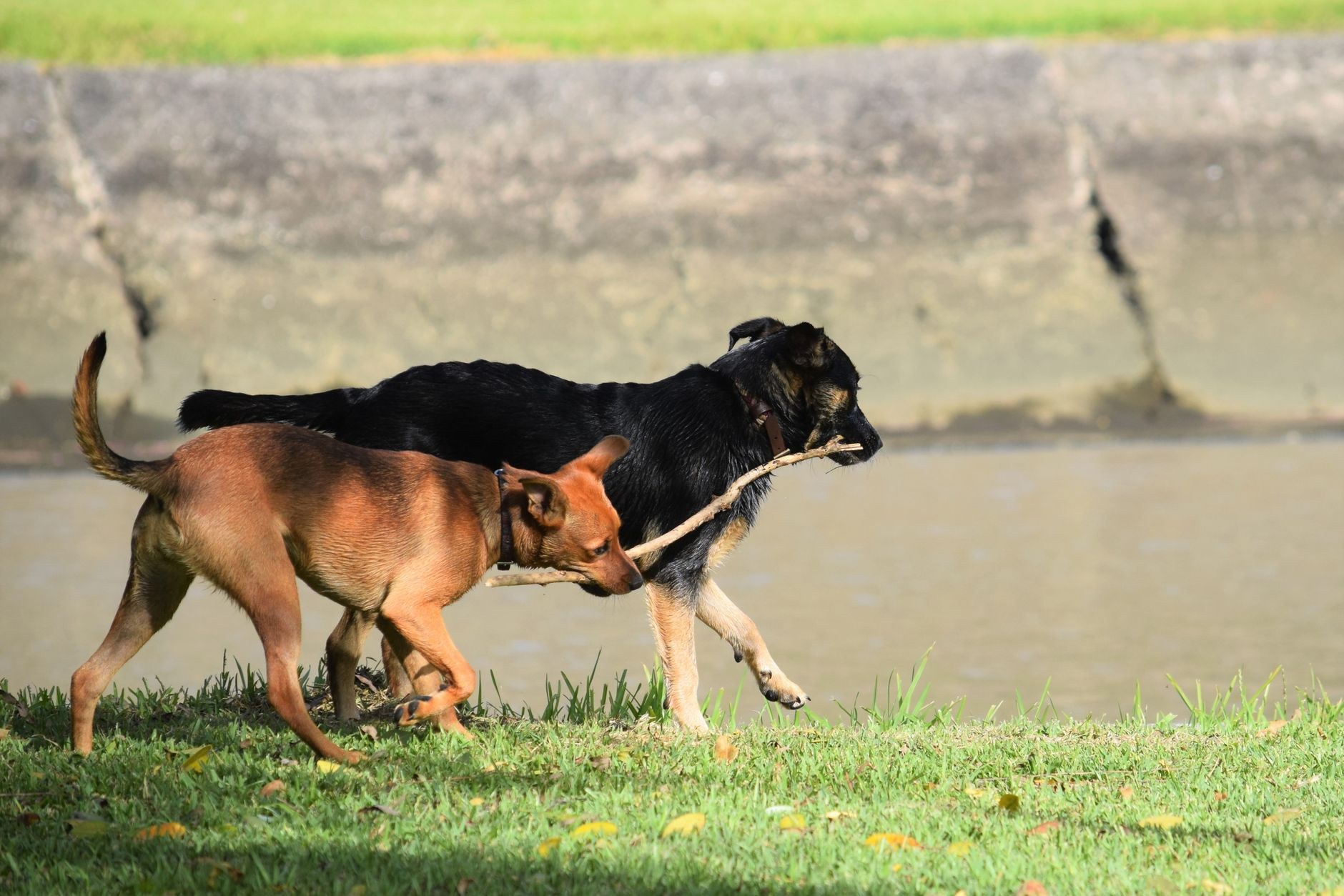
The best daycare days look effortless, but behind the fun is a team constantly reading the room. Dogs communicate almost everything through body language, and learning to read it is the single most important skill in keeping a group safe.
We look for loose, wiggly bodies and play bows, the classic front-down, bottom-up invitation to play. We watch for shake-offs, the full-body shake a dog does to reset after a burst of excitement, which is a healthy sign a dog is regulating themselves. And we keep an eye on the pauses, because good play has natural breaks. Two dogs that wrestle non-stop with no pauses can tip from play into something tenser, so we build in breaks before they need them.
Just as important is spotting the quieter signals. A dog licking its lips, yawning out of context, turning its head away, or trying to put a person or object between itself and another dog is asking for space. We give it to them immediately, because a dog that feels heard rarely feels the need to escalate.
This is why supervision and sensible numbers matter so much. You cannot read a room you are not standing in, and you cannot watch subtle signals in a crowd. Keeping our groups manageable and our team on the floor is not the expensive way to run daycare, it is the only way to do it properly.